

Haley Wood: Bad Alchemy
Carol Schlosberg Gallery
February 3 - March 13
Artist Reception: Friday, February 6th, 5:30-7:30pm
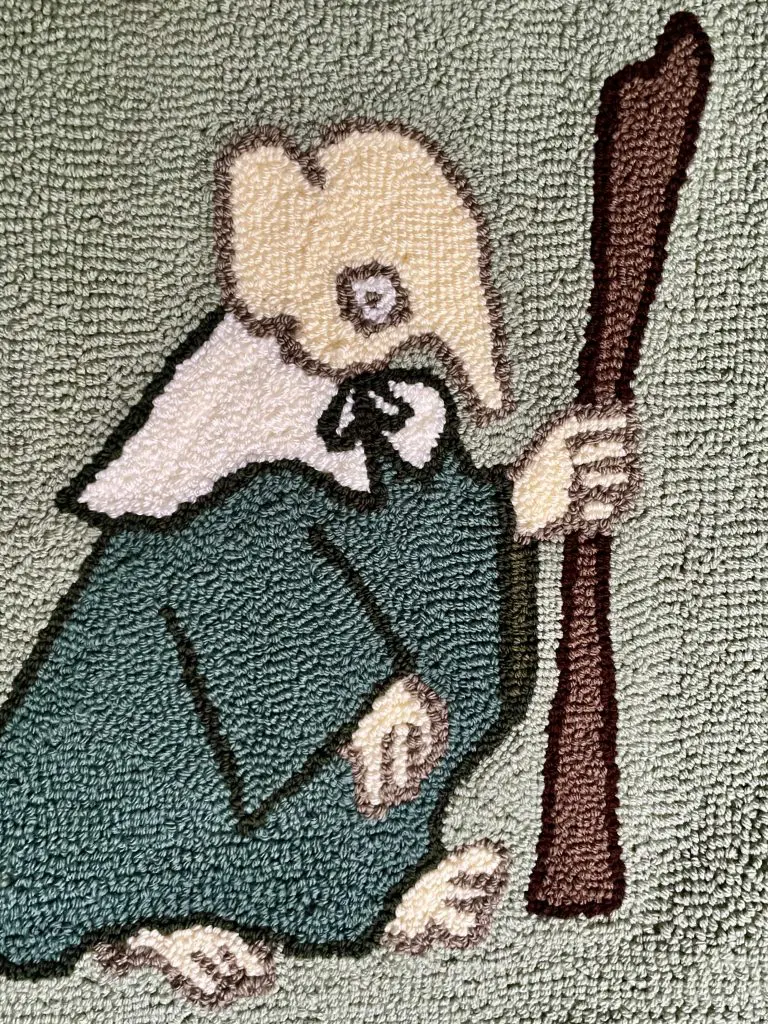
In a new series created for the Carol Schlosberg Gallery, fiber artist, Haley Wood, explores the classic imagery of alchemy—such as the three stages of blackening, whitening and reddening, and the hermaphroditic form—through intricate textiles and layered compositions. Wood draws visual parallels between alchemical themes and obsessive-compulsive disorder (OCD) as described by the psychologist, Carl Jung, such as imagery of the wheel and ouroboros representing the cyclical nature of compulsive thought.
Bad Alchemy is an exploration of the dynamic between Hermetic alchemy and Jung. Then called “compulsion neurosis,” Jung described individuals with this condition as “indeed brimful of inhuman beastliness and ruthless evil, against the integration of which the very delicately organized personality puts up a desperate struggle.” By performing various acts of “meticulousness and ceremonial punctilio,” the ruthless evil within may be avoided.
Wood’s series for this exhibition is also inspired by the Slapp Happy/Henry Cow song “Bad Alchemy”, “Bad” translates in German to a prefix for spa towns, or villages with a healing hot spring. In the central piece of this exhibition Wood investigates the purification rituals that can manifest both in alchemy and OCD. Whether there will ever be a solution to this inhuman beastliness is unknown- but to look upon a quote from Jung’s dream analysis: “Salvation does not come from refusing to take part or running away. Nor does it come from just drifting. Salvation comes from complete surrender; with one’s eyes always turned to the centre.”
Haley Wood is a fiber artist living in Cambridge, Ma. She has shown her work at the Abigail Ogilvy Gallery in Los Angeles and Boston, the MassArt Auction, and the SPRING/BREAK Art Fair in Manhattan. She holds a BFA in Fibers from Massachusetts College of Art & Design. She has received the MassArt Milestone Grant, Comics Advocacy Group Mini Grant, Marilyn Pappas Award, and the Barbara L. Kuhlman Award.